How to Bag a Christmas Turkey, Wasp Archery Style
Though spring gobbler seasons are still months away, bowhunters in some states still have time to punch a winter turkey tag
Diehard bowhunters are opportunists. When one hunting opportunity ends, we start looking for the next. With deer season winding down, perhaps you’re dreaming of Florida feral hogs or Hawaii axis deer. But for many hunters, turkeys provide opportunity that’s much closer to home and cheaper too.
While spring turkey seasons are still months away, plenty of states have fall and winter seasons that run through December and into January. Winter hunts are vastly different from April and May hunts when the toms are gobbling, so here are some tactics to guide your wintertime turkey pursuit.
FOOD = TURKEYS
For winter turkeys, you won’t be able to pop in and out of spots to strike up a gobbler with your calls and find success like you can in the springtime. Food is the name of the game in the late season. Cornfields are the hot bet, but soybean fields and cattle pastures where farmers and ranchers feed silage can attract flocks, too.
The best part is that, unlike deer, turkeys are only active during daylight hours, which means you can often locate flocks by driving around and glassing food sources. Landowners are generally more likely to permit you to hunt turkeys than deer, too, so don’t be afraid to knock on doors when you notice birds on private ground.
If you suspect that a particular field could have turkey traffic but you aren’t seeing turkeys, they could be held up in the woods, especially during the late morning when they often perch on sticks or tree limbs in the timber to soak up the sun. If there is snow on the ground, take a hike and check for signs of scratching. Unless the snow is drifting, you’ll see obvious signs of recent turkey activity if birds are using the field daily.
GROUND BLIND GAME
In cold weather, ground blinds make a much more effective ambush than sitting against a tree trunk. You can bring a propane heater to keep the blind warm, and you’ll be able to draw your bow undetected inside a blind, despite all the eyes of a winter turkey flock. Position the blind in advance, if possible, especially if you know that the turkeys are roosting nearby. It can be very difficult to set up quietly without busting birds from the roost by setting up the day you hunt.
Don’t hesitate to set your blind in a wide-open field, right amidst the feeding activity. Unless the flock has been conditioned by other hunters to avoid blinds, your blind will go unnoticed, the same as farm equipment or hay bales.
MORNING HUNTS VS. EVENING
Wintertime turkeys often feed in the same place in the mornings and evenings, so which is a better time to go? Well, your schedule is the first consideration. Secondly, consider access. If you get out there well before dawn and quietly tuck into your blind, you’re golden. Accessing your blind in the afternoon can be trickier, as birds might already be in the field or just inside the timber, see you coming, and spook. Use your best judgment.
DECOYS AND CALLS
Most of the time, winter turkeys are easy to pattern. A couple of consecutive scouting missions is usually all it takes to narrow down a place to set your blind for a 20-yard-or-closer shot opportunity. But decoys can help position birds for an even closer shot, and elicit some pretty exciting reactions.
One or two hen decoys will be great if you’re targeting any turkey, as both males and females become inquisitive at a new bird’s presence. If you’re specifically targeting toms, an aggressive half-strut jake can be dynamite, as gobblers pick fights with one another all year long, not just in the spring.
Bring your turkey calls, too. Big winter flocks are noisy as they begin to wake up and fly down from the roost. And they’re constantly squabbling over pecking order. Doing some calling won’t hurt a thing when you’re trying to coax a winter bird into range, and in some cases it can really up your odds.
MAKE THE SHOT
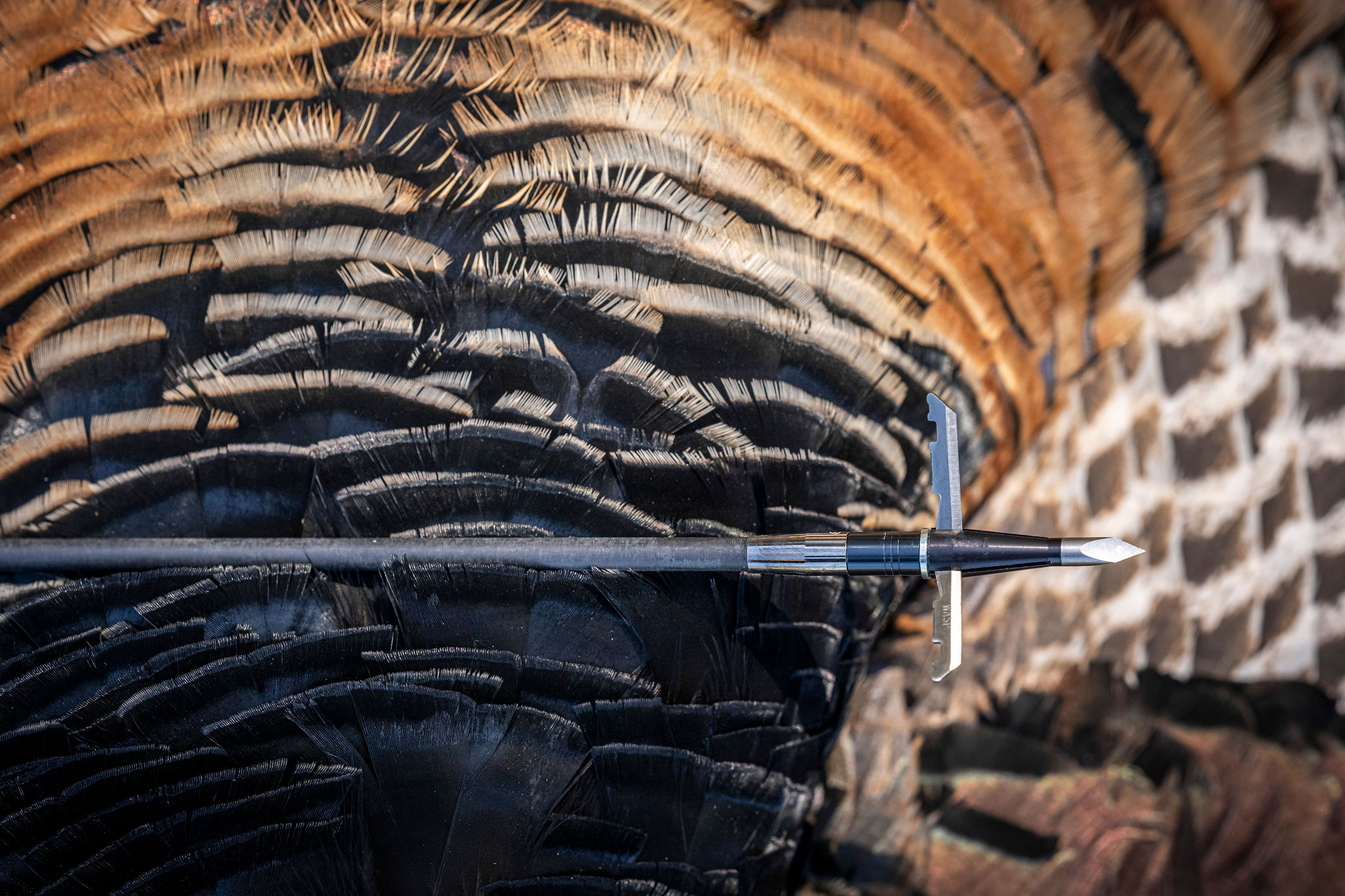
Most of the time, two holes are better than one, but there are exceptions.
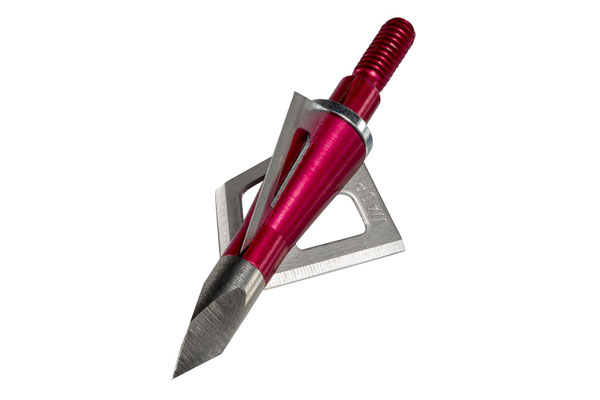
Shooting a bow while wearing cold-weather gear can be tough. Add in the excitement of 15-100 birds or more within bow range, and it gets even tougher. Slow down. Take your time. Aim small. Turkeys have small kill zones and they’re almost constantly moving, which makes an already challenging target even more so. Consider shooting a Wasp mechanical broadhead, as they create large wound channels and anchor birds quickly, increasing the chances of recovery. For lighter bow setups, the Jak-Hammer 1-1/4” 3-Blade makes a fine choice. For medium to heavy bow setups, the Dueler and Z-Force are great options. And crossbow hunters should consider the Jak-X, with its devastating 1 3/4-inch cutting diameter. Make a good shot with any of those models, and you’ll be the hero of Christmas dinner.
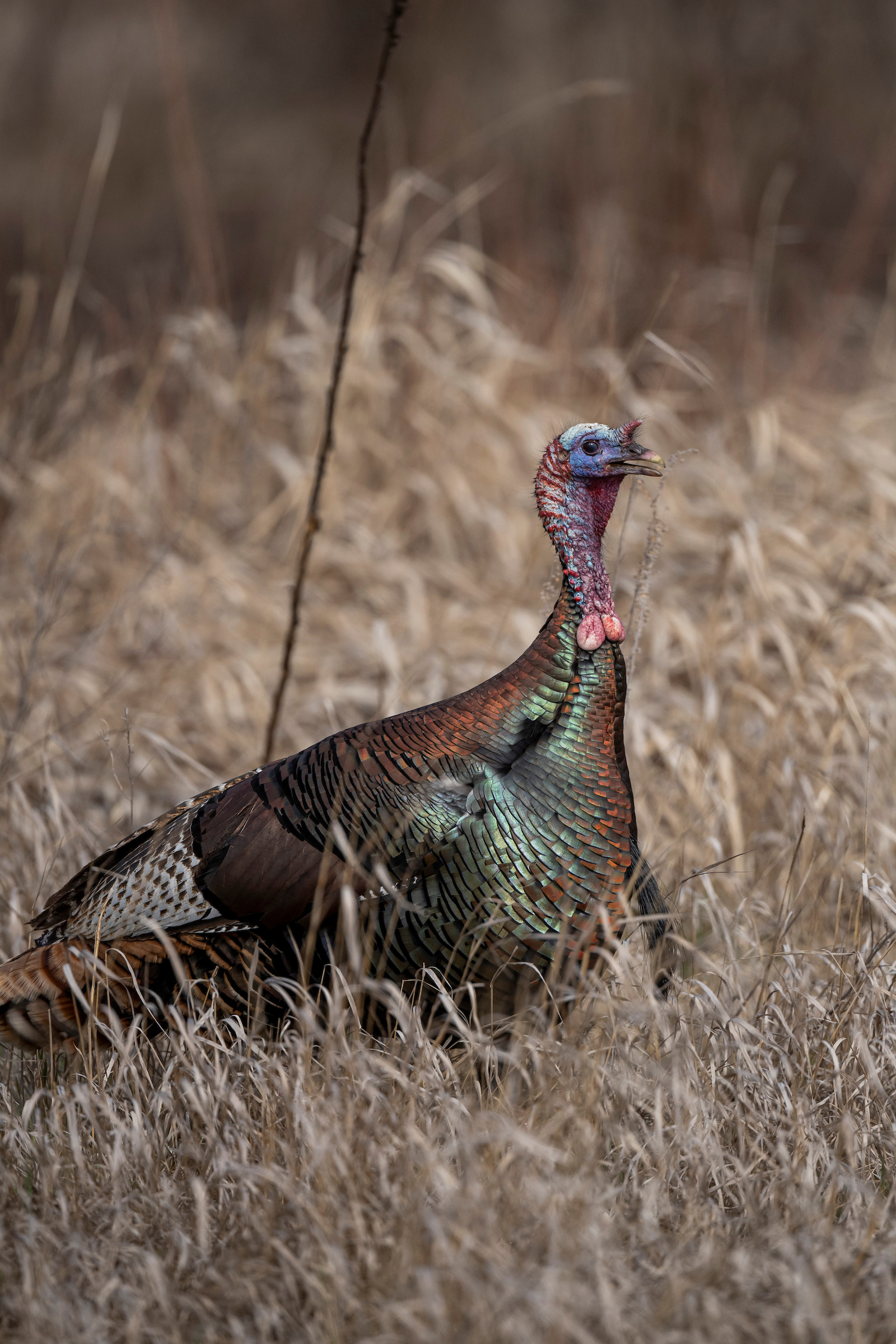
— Story by Wasp Archery staff; gobbler photo by John Hafner
View All Posts