6 Good Reasons to Turkey Hunt with a Crossbow
Shotguns and vertical bows have their places in the turkey woods, but carrying a crossbow can give you the best of both worlds
It’s a crisp, sunny morning, and the hardwoods have been silent for an hour. The warm rays are making you drowsy. You grab your slate call and issue a few yelps. A gobble suddenly shatters the silence. You glance left; a tom is 100 yards away and coming fast. Things are about to get exciting, particularly because you’re toting a crossbow.
Shotguns are by far the most common tools for turkey hunting, of course, and for good reason. But many bowhunters love the thrill of arrowing a gobbler at close range as it storms a decoy spread. The problem with bowhunting turkeys is that it can be incredibly difficult to fill tags, far more so than with a shotgun.
A crossbow splits the difference in many ways, providing a middle ground with the up-close-and-personal thrill of archery hunting turkeys, but with some of the conveniences of shotgun hunting. For turkey hunters who are looking for a challenge but who also really enjoy fried turkey breast, a crossbow just might be the perfect hunting tool. Here’s why.
THERE’S NO NEED TO DRAW
One of the most difficult aspects of bowhunting turkeys is reaching full draw. Turkeys have incredible vision, and the movements of drawing a bow have ruined countless would-be shot opportunities. Because a crossbow is cocked and ready before a bird appears, it is more like a shotgun in terms of target acquisition. Of course, you still have to raise it slowly and when the bird is preoccupied, or his vision is obstructed, but it’s far easier than drawing a bow.
PINPOINT PRECISION
Some bowhunters have the skill to shoot a compound bow as accurately as a crossbow, but the average hunter will shoot better groups with a crossbow, and usually with less practice and effort. With a modern crossbow, golf ball-sized groups at 30 yards are common. In fact, shooting at the same spot during practice will usually result in wrecked arrows. That precision is particularly useful for turkey hunting. Gobblers have small kill zones, about the size of a navel orange. Hit the orange, and the bird is dead within seconds. Miss the orange, and there’s a good chance that you won’t recover your turkey. Hitting that kill zone under pressure is easier done with a crossbow than it is with a compound bow.
BETTER CONTROL
Turkeys move almost constantly. Holding a compound bow at full draw, waiting for a gobbler to stand still or present a good shot angle, can lead to muscle exhaustion and a shaky sight picture. With a crossbow, you can watch Mr. Tom in your scope for as long as it takes until you get the right shot, especially when propped on shooting sticks. Crossbows are also friendly for the run-and-gun hunter. They’re not as convenient to carry as a shotgun, but they do allow more setup flexibility than a compound bow. Crossbow hunters can set up quickly in the woods without having to worry about a ground blind or even decoys in some cases.
BLISTERING POWER
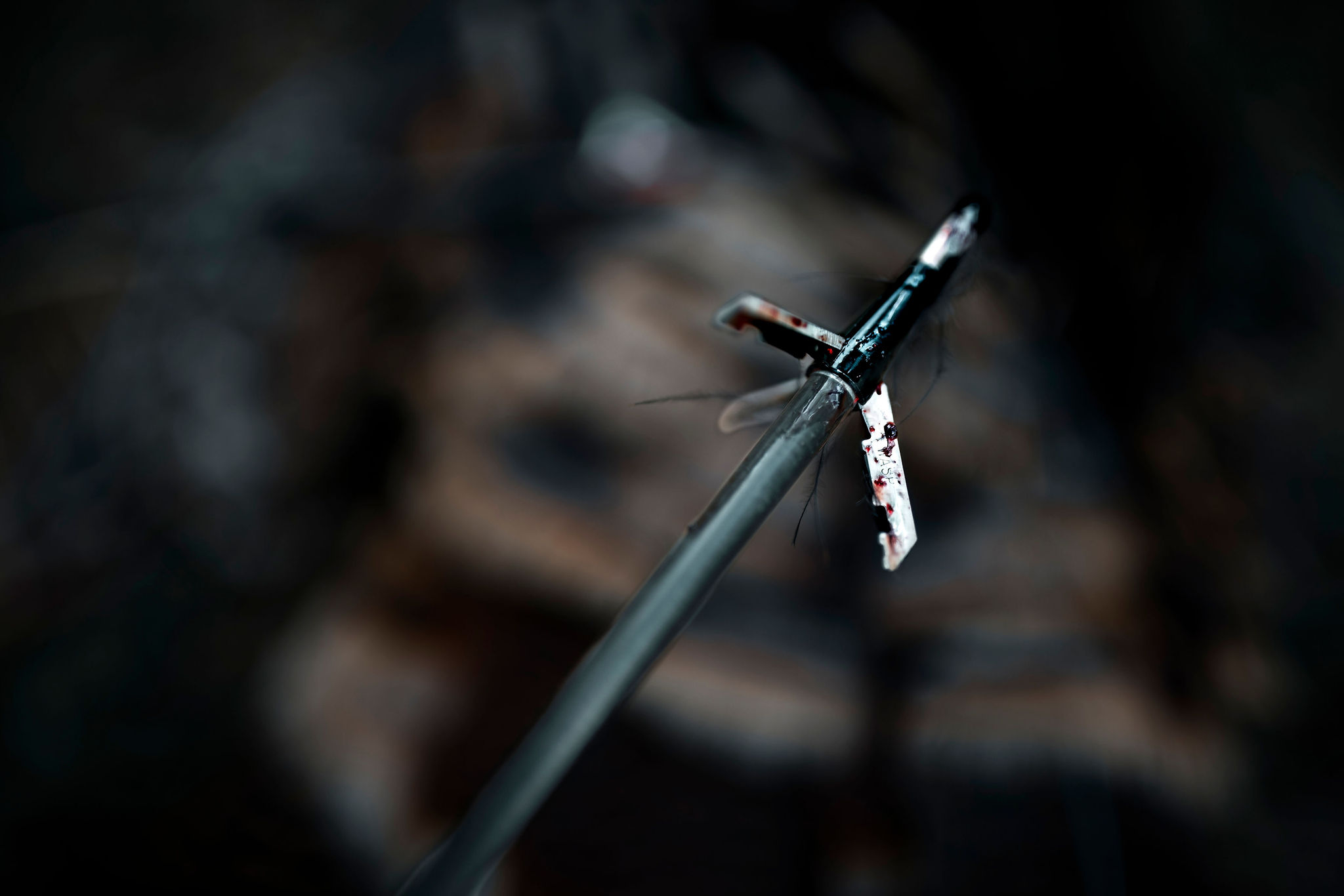
The Wasp Jak-Hammer combines rugged durability with a wide cutting diameter, making it perfect for anchoring big gobblers.
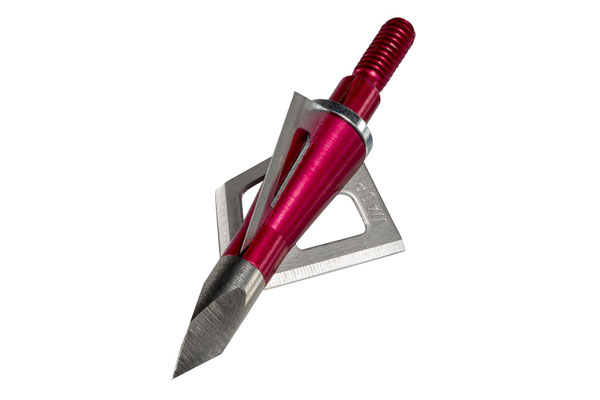
One of the best ways to quickly anchor a gobbler with an arrow to hit him well with a large mechanical broadhead, such as Wasp’s JAK-X or Dueler. Not only are the large cutting diameters devastating and more forgiving, but the energy that transfers to the bird upon impact counts, too. With a crossbow, there’s never any doubt that you’ll get enough penetration, regardless of your broadhead selection. Pass-through shots are almost guaranteed, allowing crossbow hunters who understand wild turkey anatomy to take shots from just about any angle with complete confidence.
QUIET REPORT, NO RECOIL
A 12-gauge turkey gun is loud, and with fierce recoil. Crossbows certainly make some noise at the shot, but it’s much stealthier. When you’re hunting turkeys with archery gear and multiple gobblers respond to your setup, it’s common for the survivors to stick around after the first bird is down. Frequently, they’ll even flog their downed companion. This can happen when shotgun hunting as well, but it’s the norm with arrows. That provides the advantage of being able to return and hunt the area again for the other gobblers, or for a buddy to fill a tag.
CLOSE-RANGE ACTION
Crossbow hunting does generally require more patience than shotgun hunting. You still must be discriminating with shot placement. With a 12-gauge, you don’t need to see much more than the gobbler’s head and neck to make a clean kill. If you miss or wound a bird, you can often get a follow-up shot. Crossbows take a while to reload, and so you’re probably only going to get one chance. Crossbow hunters must have the discipline to wait for a full, unobstructed view of the gobbler, ideally within 30 yards. That can take extra time that adds to the thrill of the experience—but it also gives the gobbler time to size up the situation and beat feet.
More difficult than a shotgun, easier than a bow; a good crossbow is “just right” for turkey hunters who love a challenge, but who like to fill their tags, too.
— Story and photos by Wasp Archery Staff
View All Posts