How to Bowhunt the 3 Phases of the Rut
The rut is the best time of year to kill a big whitetail buck, but hunting strategies change as the season progresses
The morning is so still that you’d be able to hear a pin drop, and it’s been that way for the first four hours of daylight. Suddenly, the silence is broken as the frozen leaves on the forest floor shatter like glass under the obvious footfalls of running deer. You quickly stand up, grab your bow from its hanger, and turn to address the noise.
As the commotion gets louder, you hear tending grunts, and suspect a buck is pushing a doe your way. Sure enough, two deer pop into view, and towering tines and a wide frame send your heart rate into overdrive. When the buck hits your 20-yard shooting lane, you mouth-grunt to stop him while drawing your bow. Quickly, you acquire the buck with your 20-yard pin and watch your arrow disappear behind his shoulder. Your knees knock together as emotions flood over you. Crashing 80 yards away confirms that your hit was perfect, and the buck you’ve dreamt about for months is all yours.
There is no more exciting time to hunt whitetails than during the rut, when the action can go from zero to 60 at any moment.
UNDERSTANDING RUT PHASES
November is heralded as the best month to hunt whitetails because it coincides with the rut in most states and provinces, although some states in the Deep South are wildcards with varying regional ruts. Still, knowing that the rut has distinct phases and understanding how deer tend to behave during each of them is crucial to consistent rut success. Plenty of hunters become disappointed when they hunt from daylight to dark during the middle of November but see minimal buck movement. The expectation is that bucks will run full-tilt all month. The reality is often something different.
To hunt the rut effectively and choose the best stand locations, again, it’s imperative to break the rut into phases including the pre-rut, peak rut, and waning rut. Many areas have late or secondary rut activity as well that runs into December, but that’s typically not the concise event seen during the first rut. For this article, we’ll focus on the primary rut phases.
- Pre-Rut
The pre-rut is when bucks feel increasing urges to breed based on hormonal changes due to photoperiod. This occurs in late-October into early November across most of the whitetail’s range. Bucks might get lucky and find a doe that pops into estrus early, but the bulk of the breeding is still a couple weeks away. Scraping activity is at its peak and bucks are largely still on bed-to-feed patterns, but they’re spending more time on their feet, checking doe bedding areas around mid-morning and scent-checking the downwind edges of food sources in the afternoons.
A great hunting tactic for this window is to hunt near a buck bedding area and rattle around mid-morning and again late in the morning. Morning hunts on scrape lines can be productive, and hunting the downwind edges of food sources where does congregate can be an effective afternoon play.
- Peak Rut
The peak rut is the window when the most breeding occurs, and biologists can very accurately predict it based on fawn fetal aging data. During this phase, the action ebbs and flows. Some bucks are out running around in between breeding, but most mature animals are holding down a doe in an area where they won’t be pestered by hunters or challenged by other bucks. Think cattail sloughs, wide-open prairies, CRP, or thickets.
If your stand locations on scrape lines, travel routes, and food sources suddenly go cold, and rattling and grunting aren’t yielding any responses, peak breeding is likely underway. This means bucks are with does and not moving much for 24- to 48-hour periods. After breeding one doe, they could easily connect with another estrus doe in the night and be locked down with her by daylight. It can be a frustrating time to hunt using traditional whitetail tactics, but you can get on the ground and try to find a locked-down pair to stalk. It’s a great time to be aggressive, especially if your rut vacation days are running out.
- Waning Rut
The end of the peak rut and the waning rut can put big, mature bucks on their feet at all hours of the day. These older animals know the party is ending and they search in earnest for the year’s final breeding opportunities. Often, 10 a.m. to 2 p.m. is a great window to see a buck up and moving. Rattling is once again highly effective, and hunting the downwind fringe of doe bedding areas is a hot bet as well.
During this timeframe, it’s not unusual to see several bucks badgering one doe. Lots of hunters burn themselves out before this rut phase, but if you can reserve some energy for it, it’s an excellent time to put in some hours, and when many of the biggest bucks of the season hit the dirt. As the waning rut winds down, watch for bucks to hit food sources late in the morning, especially isolated acorn-producing oaks or small food plots. The transition from rut to late-season is underway, so buckle down on some food and wait.
SET YOURSELF UP TO WIN
Most whitetail hunters have the best intentions for hunting from daylight to dark during their rut vacations. But days with minimal deer activity can be long when you’re confined to a ground blind or treestand platform. Depending on your personality type, it can be mentally taxing, and reality begins to outweigh your ambition. To safeguard against the urge to retreat to the truck, prepare and set yourself up to win. Most folks who quit early do so because nature calls, they get hungry, or they get bored. Without preparation and planning, these realities can pull even the stalwart whitetail hunter away from the stand. Pack snacks, water, and a hot drink.
Bring a book or your device to help pass the time. A portable power bank is a good accessory for keeping your device charged throughout the sit. Preparing thoroughly allows you to persist through the challenges of hunting all day.
SIDEBAR: KEEP A KEEN EDGE
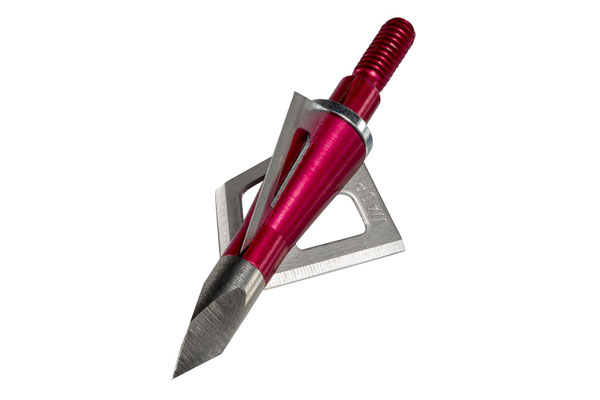
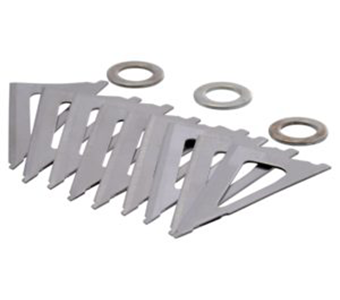 A well-built, exceptionally sharp broadhead placed in the right spot will bring even the biggest whitetail buck down in seconds. But broadheads can be dulled after a long season of taking them in and out of the quiver and practicing with them between hunts. It’s good insurance to check your blade edges on occasion and touch them up with a sharpener as needed. Many of our broadheads are easy to resharpen with diamond stones and other sharpeners. But even nicked and dinged blades don’t mean your broadhead is ruined. We sell replacement collars, washers, and blades for most of our fixed and mechanical broadheads. Whether you prefer the Havalon HV, Drone, Jak-Hammer, Z-Force, or one of our other broadheads, you can keep backup blades in your toolkit, replace them as needed, and continue hunting with confidence.
— Story by Wasp Archery Staff; buck and doe image by John Hafner
View All Posts